
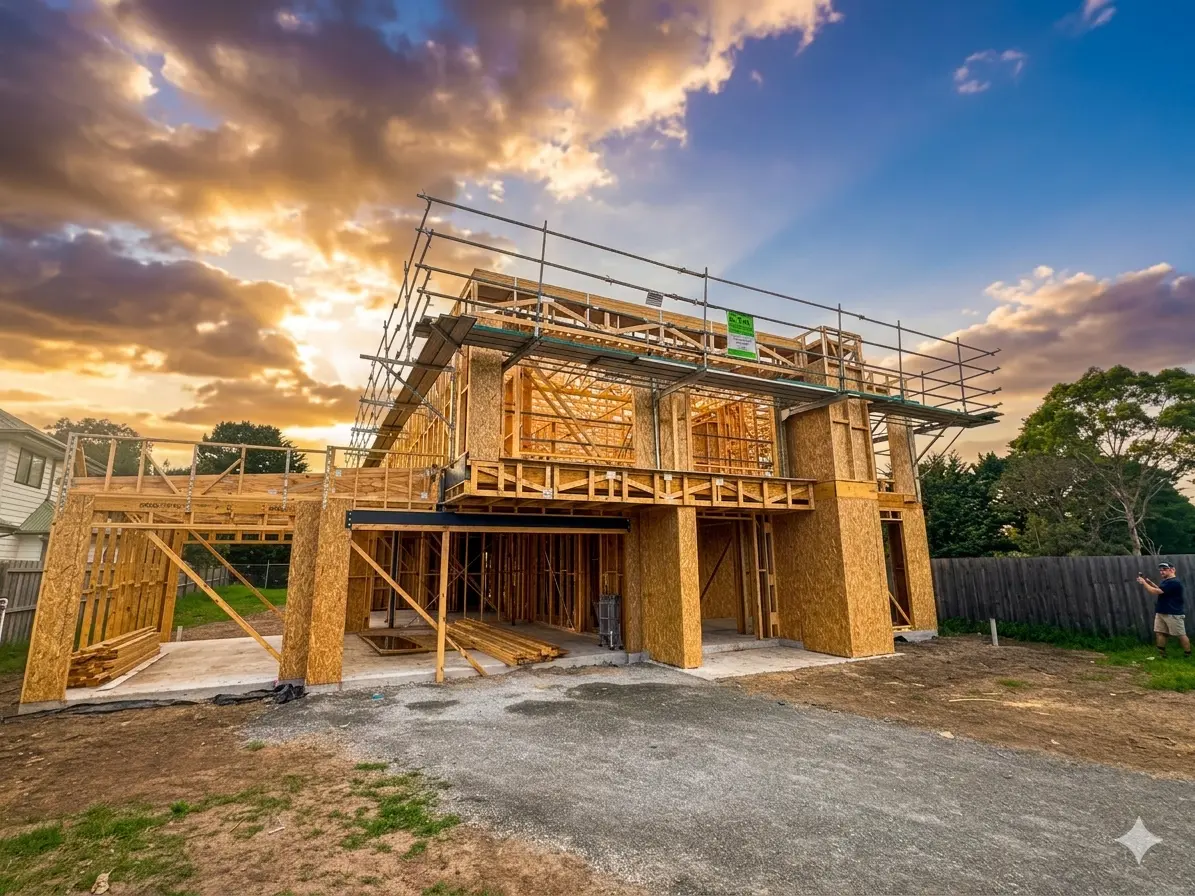
Building a new home in Melbourne is one of the largest financial commitments you will ever make. Whether you are constructing a family home in Cranbourne, a townhouse in Tarneit, or an investment property in Pakenham, the process involves multiple trades, tight timelines, and progress payments released at each completed stage.
What most new home buyers do not realise is that even a reputable builder can miss defects. Subcontractors work fast across multiple sites simultaneously, and errors in workmanship, structural compliance, and materials are more common in Melbourne’s growth corridors than most people expect.
This is where independent new home building inspections come in. An independent inspector works for you, not your builder. Carried out at each critical stage of construction, these inspections give you documented evidence of what has been built, what meets Australian standards, and what needs to be fixed before it is buried behind concrete, plaster, or cladding.
This guide walks you through every stage of construction inspections in Melbourne, from the pre-slab inspection through to final handover, what inspectors check at each stage, what defects are commonly found, and when to book.
What Is a New Home Building Inspection?
A new home building inspection is an independent, professional assessment of your home at a specific stage of construction. It is carried out by a licensed building inspector who reviews visible work completed at that point and produces a written report, typically with photographs and references to the relevant Australian standards or the National Construction Code (NCC).
These inspections are not the same as the checks performed by your builder’s site supervisor or the building surveyor. The building surveyor performs statutory inspections focused on minimum code compliance. Your builder’s supervisor works in the builder’s interest. An independent inspector works solely for you, assessing workmanship quality, compliance, and completion against your contract and approved engineering plans.
Independent new home building inspections in Melbourne are carried out at the slab, frame, pre-plaster, lock-up, and practical completion (handover) stages. They are arranged by the homeowner, not the builder, and produce a detailed written report used to hold the builder accountable before each progress payment is released.
Why Melbourne New Builds Need Independent Inspections
Melbourne is one of Australia’s fastest-growing cities. Growth corridors in the south-east (Cranbourne, Pakenham, Officer, Clyde North), west (Tarneit, Truganina, Wyndham Vale, Werribee), and north (Mickleham, Craigieburn, Mernda) are producing tens of thousands of new homes each year under tight construction timelines.
That speed creates risk. Common issues IBC inspectors find across Melbourne’s new home estates include:
- Steel reinforcement placement errors before the slab is poured
- Frame members that are out of plumb or incorrectly notched
- Missing or incorrectly installed termite barriers
- Waterproofing membranes in wet areas that are incomplete or applied at insufficient thickness
- Brickwork with voids in mortar joints and weep holes blocked
- Roofing flashings that are incorrectly lapped or unsealed
- Plasterboard installed before services are complete
- Final finishes that do not meet the tolerances set out in the Victorian Guide to Standards and Tolerances
Each of these issues is significantly cheaper to fix during construction than after handover. In many cases, defects discovered before a progress payment is released give you direct leverage to have the builder rectify the work before you pay.
Under the Domestic Building Contracts Act 1995 (Victoria), if you hold a domestic building contract, your builder cannot refuse you access to your property for an independent inspection, provided you give more than two working days’ notice.
The 5 Steps of New Home Building Inspections in Melbourne
New home building inspections in Melbourne follow the five key stages of residential construction. Each step must be completed and independently inspected before the next stage begins.
- Step 1 — Pre-Slab Inspection — before concrete is poured
- Step 2 — Frame Stage Inspection — after frame is erected, before internal lining
- Step 3 — Pre-Plaster Inspection — after services rough-in, before plasterboard
- Step 4 — Lock-Up Inspection — after roof, windows, and external cladding installed
- Step 5 — Practical Completion Inspection (PCI / Handover) — before final payment and keys
Each step is covered in full detail below.
The Five Key Construction Inspection Stages in Melbourne
Most Melbourne new home builds follow a predictable sequence. New construction stage inspections recommends an independent inspection at each of the following five stages.
Stage 1: Pre-Slab (Base Stage) Inspection
When to book: After excavation and steel reinforcement is placed, before concrete is poured.
The pre-slab inspection is the single most important inspection of your entire build. Once the concrete is poured, every element beneath it is permanently locked in. Defects at this stage, if left undetected, can affect the structural integrity of your home for decades and may only become apparent as expensive cracking, subsidence, or movement years later.
What an IBC inspector checks at slab stage:
- Excavation depths and footing layout against the engineer’s approved drawings
- Steel reinforcement bar (rebar) placement, sizing, spacing, and clearances from edges
- Vapour barrier installation — correct lapping, penetrations sealed, no tears or gaps
- Waffle pod placement and layout against structural plans
- Termite protection measures — chemical barriers, physical barriers, pipe collars (Part A)
- Drainage and plumbing stub-outs correctly positioned
- Slab edge boxing and set-out dimensions
- Site classification compliance relevant to Melbourne’s reactive clay soils
Why Melbourne’s soils make this inspection critical:
Melbourne’s growth corridors sit predominantly on reactive clay soils, classified as Class M, H1, or H2 under AS 2870. These soils expand and contract significantly with moisture changes. If the slab is not engineered and constructed correctly for the site classification, the risk of structural movement, cracking, and long-term subsidence is material. An independent inspector confirms the slab preparation matches the structural engineer’s design for your specific site.
Common defects found at this stage:
- Rebar too close to the edge of forms (insufficient cover)
- Vapour barrier laps less than 200mm or not taped at penetrations
- Waffle pods displaced from their designed positions
- Termite barrier gaps at penetration points
- Plumbing stub-out positions inconsistent with plans
Stage 2: Frame Stage Inspection
When to book: After the timber or steel frame is erected and before internal linings begin.
The frame is the skeleton of your home. It determines whether walls are straight, roofs are true, and doors and windows operate correctly once the home is finished. Defects in the frame that go undetected at this stage are covered by plasterboard and become expensive problems — cracked plaster, sagging ceilings, and doors that do not close properly — that are difficult and costly to fix later.
What an IBC inspector checks at frame stage:
- Wall frames — vertical plumb, straightness, correct stud spacing against AS 1684.2
- Top plates and bottom plates — continuity, nailing, and connections
- Roof trusses — correct installation, bracing, and tie-downs to engineer’s specifications
- Lintels over door and window openings — correct sizing and bearing lengths
- Load-bearing members — correct sizing and connections
- Bracing — diagonal bracing panels correctly positioned and fixed
- Window and door frame rough openings — size and squareness
- Noggings — correctly placed for future fixture installation
- Plumbing waste outlet locations — consistent with plans
- Any notching or drilling of framing members for services — within permitted limits
Common defects found at frame stage in Melbourne:
- Wall studs out of plumb beyond permitted tolerance
- Roof trusses with incorrect or missing bracing
- Lintels undersized for opening spans
- Service holes drilled too close to the edge of studs, compromising structural integrity
- Missing noggings for future bathroom rail, TV mount, and kitchen fixture installations
Stage 3: Pre-Plaster (Rough-In) Inspection
When to book: After electrical, plumbing, and insulation rough-in is complete, before plasterboard is installed.
This is your last opportunity to see the inside of your walls before they are permanently closed. Services installed at this stage — electrical conduits, plumbing pipes, insulation batts — will be invisible once plasterboard goes up. If something is wrong here, fixing it after plastering means cutting open walls.
What an IBC inspector checks at pre-plaster stage:
- Electrical rough-in — conduit routing, switchboard cabling, correct positioning of outlets
- Plumbing rough-in — pipe routing, fall on drainage lines, hot and cold water rough-ins
- Gas rough-in positioning (where applicable)
- Wall insulation — correct R-value batts fully installed without gaps, compression, or bridging
- Ceiling insulation — correctly placed across all ceiling areas
- Waterproofing in wet areas — membrane applied at correct thickness and coverage (this is often a separate waterproofing stage inspection)
- Fire-stopping at penetrations through fire-rated elements
- Window flashings — correctly installed before external cladding seals them
Common defects found at pre-plaster stage:
- Insulation batts compressed, bridged, or missing in sections
- Plumbing drainage without adequate fall, leading to slow drainage and blockage after occupation
- Waterproofing membrane applied below minimum required thickness or with gaps at junctions
- Electrical outlet positions inconsistent with plans
Stage 4: Lock-Up Stage Inspection
When to book: After external doors, windows, and roof covering are installed and the home is weather-resistant.
Lock-up is one of the largest progress payment milestones of your build. An IBC inspection at this stage ensures your payment is being released against work that has genuinely been completed to standard.
What an IBC inspector checks at lock-up stage:
- Roofing — correct installation, ridge capping, valley gutters, and flashings
- Roof penetrations — sealed and flashed correctly
- Gutters and downpipes — correct fall, connections, and overflow provisions
- External wall cladding — brickwork mortar joints, correct weep hole placement, ties
- External windows and doors — correctly installed, sealed, and operational
- External doors — correct weatherseals, thresholds, and operation
- Garage doors — installation and operation
- Site drainage — stormwater drainage outlets positioned correctly
Common defects found at lock-up stage in Melbourne:
- Ridge capping mortar cracking or missing
- Roof flashings with insufficient overlap or unsealed joints
- Brickwork mortar voids in joints
- Weep holes blocked with mortar
- Gutter fall insufficient, leading to standing water and overflow
- Window frame gaps not sealed before render or cladding
Stage 5: Practical Completion Inspection (PCI / Handover Inspection)
When to book: When your builder advises that construction is complete, before you make the final payment and receive the keys.
The Practical Completion Inspection (PCI), also called the pre-handover inspection, is your final and most comprehensive opportunity to identify defects, incomplete works, and non-compliant items before you take ownership of the property. Once you accept handover and make the final payment, your leverage with the builder changes significantly.
This is also the stage where IBC conducts the most thorough review — covering every accessible area of the completed home against your contract, plans, and the Victorian Guide to Standards and Tolerances.
What an IBC inspector checks at PCI / handover:
- External — brickwork, render, cladding, painting, paths, driveway, fencing, landscaping per contract
- Roofing — tiles or metal sheeting, ridge, valleys, gutters, fascias, soffits
- Windows and external doors — operation, seals, locks, glazing
- Garage — door operation, floor, wall, and ceiling finish
- Internal walls and ceilings — paint finish, plasterboard joins, cornice, architraves
- Flooring — tiles (falls, grout, lippage), timber, carpet, and vinyl installation
- Kitchen — cabinetry, benchtops, splashback, appliances, plumbing connections
- Bathrooms and laundry — tiling, fixtures, waterproofing, drainage falls, sealing
- Wet areas — shower screens, baths, vanities
- Electrical — all power points, light fittings, smoke alarms, switchboard, RCDs
- Plumbing — hot water system, all taps and fixtures, drainage, pressure
- Air conditioning and heating — installation and operation per contract
- Stairs and balustrades — compliance with NCC Part 3.9.1 (height, balusters, handrails)
- All items listed in your contract specifications — confirmed as delivered
Minor vs major defects at handover:
Under Victorian law, minor defects identified at handover must be rectified by the builder within 12 months of occupation. Major structural defects can be reported to the builder for up to 10 years under Victorian Consumer Affairs legislation. An IBC inspection report provides the documented evidence you need to pursue either.
If defects are disputed, the report serves as independent evidence for the Building and Plumbing Commission (BPC) — the Victorian regulator that commenced operations on 1 July 2025, replacing the Victorian Building Authority (VBA) and the Domestic Building Dispute Resolution Victoria (DBDRV) as the primary point of contact for homeowner disputes.
Quick Reference: All Five Stages at a Glance
| Stage | When to Book | What Gets Checked | If You Miss It |
|---|---|---|---|
| Pre-Slab | Before concrete poured | Steel, vapour barrier, termite protection, drainage | Structural defects locked in permanently |
| Frame | After frame erected | Wall plumb, trusses, bracing, lintels, services openings | Covered by plaster — expensive to access |
| Pre-Plaster | After services rough-in, before plasterboard | Electrical, plumbing, insulation, waterproofing | Walls close permanently — no visibility |
| Lock-Up | After roof, windows, doors installed | Roofing, cladding, gutters, windows, external works | Progress payment released before problems found |
| PCI / Handover | Before final payment and keys | Everything — full home against contract and standards | Legal and financial leverage significantly reduced |
Do You Need All Five Inspections?
If your budget allows, yes. Each stage inspection protects you at a specific point in the build when defects are still accessible and fixable. Skipping early stages means any defects found at handover may already be concealed — and the cost to rectify them will be far higher.
If budget is a constraint, prioritise in this order:
- Pre-Slab — irreversible once poured
- PCI / Handover — your final legal leverage point
- Pre-Plaster — services are never visible again after this point
- Frame — structural, but some elements remain accessible at pre-plaster
- Lock-Up — important for progress payment, but most external defects visible at PCI
How to Choose an Independent Building Inspector in Melbourne
When selecting an inspector for your new home building inspections in Melbourne, verify the following:
- VBA registration — your inspector must be a registered building practitioner (Domestic Builder Unlimited) or hold appropriate registration under the Building Act 1993 (Victoria). From 1 July 2025, registration is managed by the Building and Plumbing Commission.
- Independence — confirm the inspector has no relationship with your builder or developer
- Report turnaround — 24-hour report delivery is standard; ensure this is guaranteed
- Insurance — professional indemnity and public liability insurance must be current
- Experience in new residential construction — pre-purchase inspectors and new home construction inspectors require different expertise; confirm your inspector specialises in new builds
Areas IBC Property Inspections Serves for New Home Building Inspections
IBC Property Inspections provides independent new home building inspections across Melbourne and Victoria, including Melbourne’s major growth corridors:
South-East: Cranbourne, Cranbourne East, Cranbourne West, Pakenham, Officer, Clyde, Clyde North, Berwick, Narre Warren, Lynbrook, Lyndhurst, Frankston
West: Tarneit, Truganina, Point Cook, Werribee, Hoppers Crossing, Wyndham Vale, Manor Lakes, Mambourin
North: Mickleham, Craigieburn, Mernda, South Morang, Epping, Wollert, Donnybrook, Greenvale
North-West: Melton, Melton West, Fraser Rise, Rockbank, Caroline Springs, Sunbury
For construction stage inspections in any of these areas, contact IBC Property Inspections for a free quote.
Frequently Asked Questions: New Home Building Inspections Melbourne
Q: What is a new home building inspection in Melbourne? A: A new home building inspection is an independent professional assessment of a residential property at a specific stage of construction. Carried out by a licensed building inspector on behalf of the homeowner, it identifies defects, workmanship issues, and non-compliance with Australian standards before each stage is concealed by subsequent construction work. In Melbourne, the five main inspection stages are pre-slab, frame, pre-plaster, lock-up, and practical completion (handover).
Q: How much do construction stage inspections cost in Melbourne? A: Individual stage inspections in Melbourne typically range from $280 to $500 per stage, depending on the size and complexity of the home and which stage is being inspected. Full construction stage inspection packages covering all five stages are available from most independent inspectors and generally offer better value than booking each stage separately. Contact IBC Property Inspections for a free quote tailored to your build.
Q: Can my builder refuse an independent inspection? A: No. Under Section 19 of the Domestic Building Contracts Act 1995 (Victoria), if you hold a domestic building contract, your builder must provide access to your property for an independent inspection if you give more than two working days’ notice. If your builder refuses, you can lodge a complaint with the Building and Plumbing Commission (BPC), which replaced the Victorian Building Authority (VBA) on 1 July 2025.
Q: Is a new home building inspection the same as the builder’s inspection? A: No. Your builder’s supervisor or the building surveyor conducts checks in the builder’s interest or for minimum statutory compliance only. An independent building inspector is engaged by and reports solely to you, the homeowner. Independent inspections assess workmanship quality, contract compliance, and construction against Australian standards — not just minimum code requirements.
Q: When should I book a slab inspection for my Melbourne new build? A: Book your slab inspection after steel reinforcement has been placed and the formwork is complete, but before the concrete pour begins. This is a narrow window — typically 24 to 48 hours. Contact your inspector as soon as your builder advises that the slab is ready to pour, and confirm the exact pour date so the inspection can be arranged in time.
Q: What happens if defects are found at the handover inspection? A: Your inspector’s report documents all defects with photographs and references to relevant standards. You provide this report to your builder and request rectification before making the final progress payment. Minor defects must be rectified within 12 months of occupation. Major defects can be reported to the builder for up to 10 years under Victorian Consumer Affairs law. If the builder refuses, you can escalate to the Building and Plumbing Commission (BPC) or, as a last resort, VCAT.
Q: Do I need all five stage inspections or just the handover inspection? A: Both the pre-slab and the handover (PCI) inspections are the highest priority. The pre-slab inspection is the only opportunity to identify defects in the concrete foundation before they are permanently sealed. The PCI is your last opportunity to hold the builder accountable before you take ownership. If budget allows, all five stages provide comprehensive protection throughout the build.
Ready to Book Your New Home Building Inspections in Melbourne?
IBC Property Inspections provides independent new home building inspections across Melbourne and Victoria. Our licensed inspectors deliver detailed reports within 24 hours, giving you the documentation you need to hold your builder accountable at every stage of your build.
Or call us directly: 0420 614 760

Leave A Comment